
Dentofacial Orthodontics in Sandgate
Orthodontic care is about more than whether teeth look straight.
Dentofacial orthodontics considers the position of the teeth together with the way the jaws, bite and surrounding facial structures are developing.
At Dental Seasons, we assess children, teenagers and adults with concerns such as crowding, narrow dental arches, crossbites, prominent teeth, bite problems and other orthodontic issues.
Treatment recommendations depend on the patient’s age, stage of growth, dental development and individual clinical findings.
Children, teenagers and adults welcome.


What is dentofacial orthodontics?
Dentofacial orthodontics looks at how the teeth fit together and how the jaws and facial structures are developing.
For growing children, this can include assessing whether the upper and lower jaws are developing in a way that provides suitable space and relationships for the permanent teeth.
For teenagers and adults, the focus may be more heavily on tooth position, bite relationships and the orthodontic options available to improve function or appearance.
Not every orthodontic concern requires early treatment.
Sometimes the most appropriate approach is simply monitoring development and waiting until a later stage.
The purpose of assessment is to understand the individual problem before deciding whether treatment is needed and, if so, when.
Reasons to consider an orthodontic assessment
Crowded or overlapping teeth
Crowding occurs when there is not enough available space for the teeth to align comfortably.
The cause and appropriate treatment depend on tooth size, available space, jaw relationships and dental development.
Crossbites
A crossbite occurs when some upper teeth bite inside the lower teeth rather than outside them.
Some crossbites are worth assessing during growth because the relationship between the upper and lower jaws may influence treatment planning.
Deep or open bites
The front teeth may overlap excessively in a deep bite or fail to meet adequately in an open bite.
The cause may involve tooth position, jaw relationships, habits or a combination of factors.
Prominent front teeth
Upper front teeth that sit significantly forward may be more exposed to dental injury and can also affect how the bite functions.
Assessment helps determine what is contributing to the position of the teeth.
Early or unusual tooth eruption
Teeth do not always erupt in the expected position or sequence.
Monitoring developing teeth can help identify situations where space, retained baby teeth or another factor may need attention.
Jaw growth or bite concerns
Parents may notice that the upper or lower jaw appears relatively narrow, prominent or retrusive.
An orthodontic assessment can help determine whether this represents normal variation or a developing bite concern worth monitoring.
Does every child need early orthodontic treatment?
Orthodontic care often develops over months or years, so clear communication and a comfortable relationship with the treating team are important.
Here are a few experiences shared by patients who have visited Dental Seasons.
No. Early orthodontic assessment does not automatically mean early orthodontic treatment.
Some developing bite problems may benefit from treatment while a child is still growing.
Others are better monitored until more permanent teeth have erupted or growth has progressed further.
Starting treatment simply because a child is young is not the goal.
The important question is whether treating at a particular stage offers a meaningful advantage compared with waiting.
If monitoring is the better option, we will explain what we are watching and when another assessment would be appropriate.
What happens at an orthodontic consultation?
Discuss your concerns
We begin by asking what you or your child have noticed and what you would like assessed.
This may relate to crowding, the bite, tooth position, jaw development or appearance.
Examine the teeth and bite
We assess the position of the teeth, how the upper and lower teeth fit together and relevant features of jaw and facial development.
Gather records where appropriate
Depending on the clinical question, records may include photographs, digital scans and dental or orthodontic imaging.
Not every patient requires every type of record.
Discuss whether treatment is needed
We will explain what we can see and whether the most appropriate approach is treatment now, monitoring growth and development or considering treatment at a later stage.
Orthodontic assessment during growth
Childhood and adolescence provide opportunities to observe how the permanent teeth and jaws are developing.
In selected cases, treatment during growth may help manage a developing bite problem, create or maintain space, or influence the relationship between the dental arches.
Treatment options depend on the individual concern and may include removable appliances, expansion, functional appliances, fixed orthodontic treatment, clear aligners or simply monitoring.
No single appliance is appropriate for every child.
Treatment should be selected because it addresses a specific clinical problem rather than because a particular appliance is routinely used.
Dentofacial orthodontics for teenagers and adults
Orthodontic treatment is not limited to young children.
Teenagers and adults may seek treatment for crowding, spacing, bite concerns or the appearance of their teeth.
Depending on the problem, options may include fixed orthodontic appliances or clear aligners such as Invisalign.
Adult treatment planning also needs to consider gum health, existing restorations, missing teeth, previous dental work and whether jaw growth has already finished.
Where a significant skeletal jaw discrepancy cannot reasonably be addressed through tooth movement alone, specialist orthodontic or surgical assessment may sometimes be appropriate.
Clear aligners for suitable orthodontic problems
Invisalign uses a series of removable clear aligners to gradually move teeth.
Clear aligners can be a useful option for many teenagers and adults, but they are not automatically the best treatment for every orthodontic problem.
Before recommending Invisalign, we assess the teeth, bite, available space and movements required.
Where another orthodontic approach is more predictable or appropriate, we will explain the alternatives.
Oral habits and developing teeth
Habits involving the lips, tongue, fingers or dummy use can sometimes influence the position of developing teeth and the bite.
Mouth breathing may also be noticed in some children, but persistent nasal obstruction or sleep-related breathing concerns should not automatically be assumed to be orthodontic problems.
Where symptoms suggest that medical assessment may be appropriate, we may recommend discussing them with a GP, ENT specialist or another relevant health professional.
Our role is to assess the dental and orthodontic aspects and recognise when another discipline should be involved.
Digital orthodontic records and treatment planning
Digital records can help us document tooth position and plan orthodontic treatment.
Depending on the individual case, this may include clinical photographs, digital dental scans and appropriate dental or orthodontic X-rays.
Dental Seasons also has 3D CBCT imaging available when clinically indicated.
The type of imaging recommended depends on what information is required and should be justified by the clinical question rather than performed routinely.
What our patients say
We had such a wonderful experience at this clinic! My partner had an invisible brace fitting and a teeth cleaning, and the entire team was incredible. They greeted us warmly, took their time explaining the treatment steps, and made sure my partner was comfortable at every stage. The dentist and hygienist were attentive, professional, and truly went the extra mile to ensure everything was perfect. The invisible brace fitting was smooth, and the teeth cleaning left my partner’s smile sparkling. We couldn’t be more pleased with the service and care!
Dentofacial orthodontics in Sandgate
Dental Seasons is located at 119A Brighton Road, Sandgate QLD 4017.
We provide orthodontic and dentofacial assessment for children, teenagers and adults from Sandgate and surrounding North Brisbane and bayside communities.
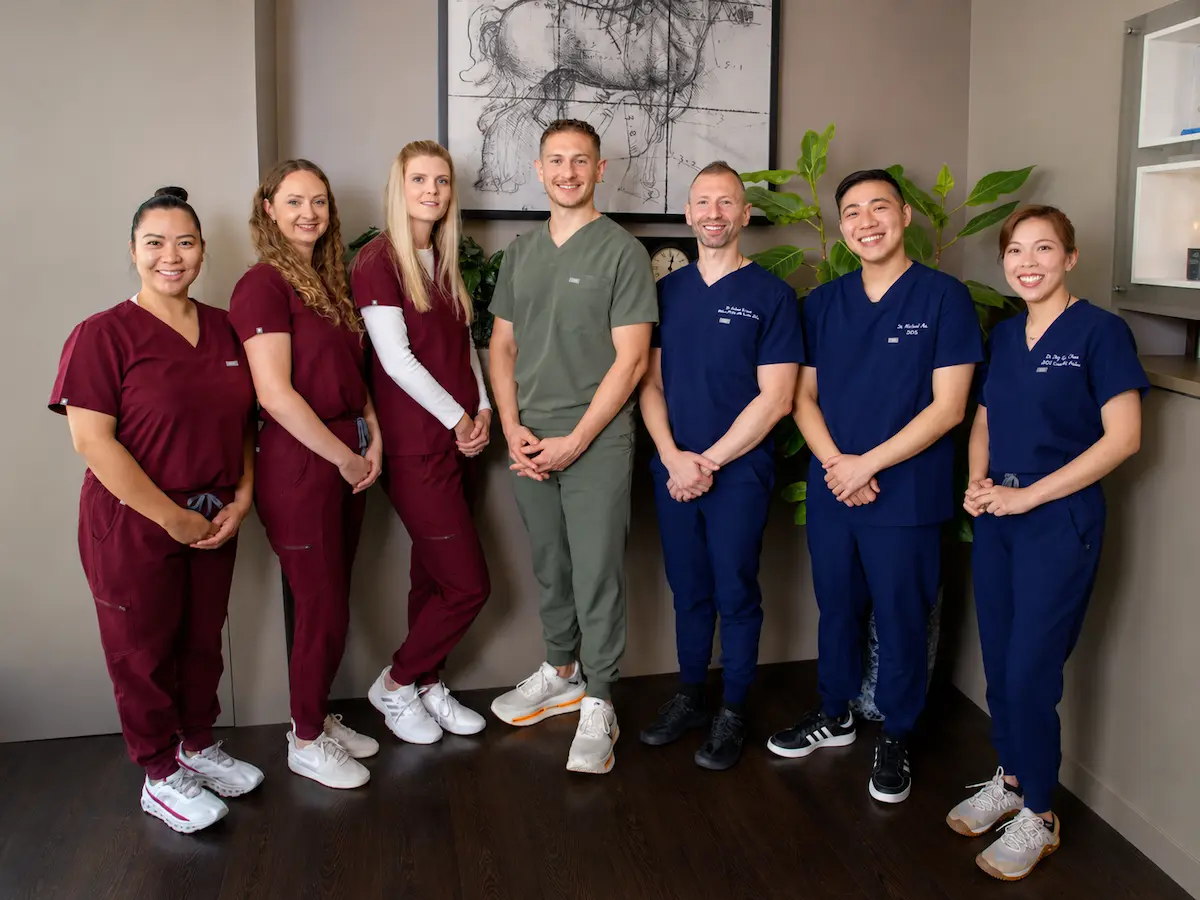
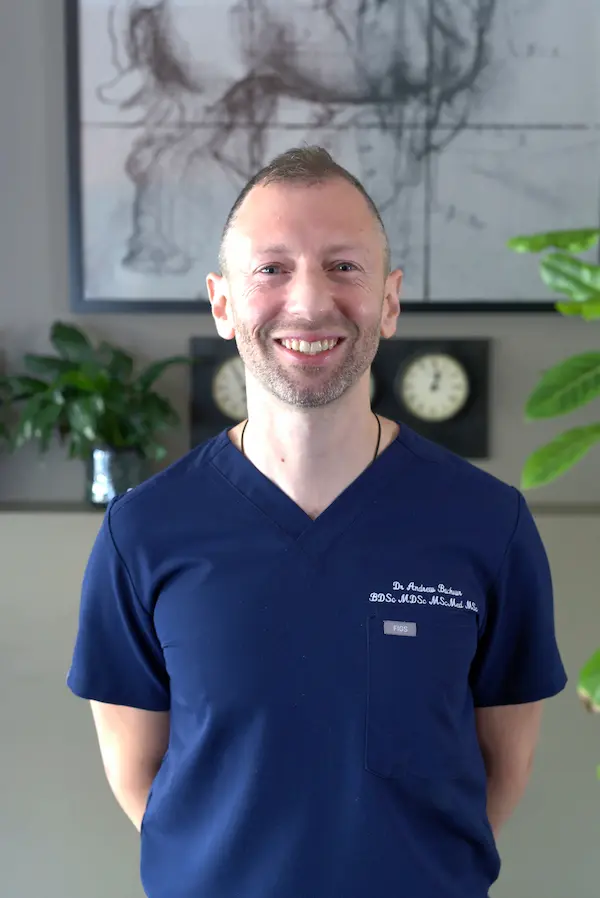
Dr Andrew Bachour and Dr Pei San Chan have undertaken postgraduate education in orthodontics and dentofacial orthopaedics and provide orthodontic assessment and treatment within our Sandgate clinic.
Where specialist orthodontic or surgical assessment is more appropriate, we can discuss referral options.
Dentofacial orthodontic questions
What is the difference between orthodontics and dentofacial orthodontics?
Orthodontics focuses on diagnosing and managing irregularities of the teeth and bite. Dentofacial orthodontic assessment also considers the relationship and development of the jaws and surrounding facial structures, particularly in growing patients.
At what age should my child have an orthodontic assessment?
There is no single age at which every child needs orthodontic treatment. An assessment may be useful when there are concerns about crowding, crossbites, unusual tooth eruption, jaw relationships or other developing bite problems. Treatment may begin early in selected cases, while many children are simply monitored until a later stage.
Does an early orthodontic assessment mean my child needs braces?
No. Assessment and treatment are different things. We may recommend treatment, monitoring or waiting depending on the specific problem and stage of development.
Can jaw growth be changed?
Jaw growth can sometimes be influenced during development in selected situations, but the amount and predictability depend on the individual problem, age and stage of growth. We avoid promising that every jaw relationship can be changed with an appliance.
Do you provide expanders?
Expansion may be considered for suitable patients where widening the dental arch or addressing a particular bite relationship is clinically appropriate. The type of appliance and timing depend on the individual case.
Do you provide Invisalign?
Yes. Dental Seasons provides Invisalign assessment and treatment for suitable teenagers and adults. Clear aligners are one orthodontic option rather than the right choice for every patient.
Can mouth breathing affect orthodontic treatment?
Mouth breathing may occur alongside dental or facial development concerns, but there are many possible causes. Persistent nasal obstruction or sleep-related symptoms may need assessment by a medical practitioner or ENT specialist as well as dental evaluation.
Do you treat TMJ problems as part of orthodontics?
Jaw-joint symptoms are assessed separately from tooth alignment. Some patients may have both orthodontic and TMJ concerns, but orthodontic treatment should not be presented as a universal treatment for jaw pain.
Who provides orthodontic care at Dental Seasons?
Dr Andrew Bachour and Dr Pei San Chan have undertaken postgraduate education in orthodontics and dentofacial orthopaedics. The most appropriate clinician depends on the patient’s needs and appointment type.
Do I need a referral?
No referral is required to book an orthodontic assessment at Dental Seasons.


Concerned about tooth or jaw development?
Whether you are considering orthodontic treatment for your child, teenager or yourself, the first step is understanding the teeth, bite and individual treatment needs. Book an orthodontic consultation with our Sandgate team and we can explain what we find and whether treatment now, later or not at all is the most appropriate approach.