Dental Implants in Sandgate
A dental implant is one option for replacing a missing tooth or supporting a larger dental restoration.
The implant is placed into the jawbone and can support a dental crown, bridge or suitable denture once healing has taken place.
At Dental Seasons, implant treatment begins with careful assessment of your teeth, gums, jawbone, medical history and the space being restored.
Not everyone is suitable for dental implant treatment, and an implant is not the only option for replacing a missing tooth.
Our role is to assess the area, explain the realistic choices and help you understand the treatment, risks, timing and ongoing maintenance before you decide whether an implant is right for you.
New patients welcome.


Dental implant placement is a surgical procedure and carries risks.
Suitability, expected benefits, alternatives and potential complications need to be considered individually. Your dentist will discuss the relevant risks before you decide whether to proceed.
What is a dental implant?
A dental implant is usually a titanium fixture placed into the jawbone in the area of a missing tooth.
The implant acts as a foundation for a dental restoration.
Once the implant has integrated sufficiently with the surrounding bone, it may be used to support:
- A single dental crown
- A dental bridge replacing several teeth
- A removable or fixed prosthesis replacing multiple teeth
- A denture requiring additional support or retention
The implant itself replaces the root portion of the missing tooth.
The visible replacement tooth or teeth are attached separately after the appropriate healing and restorative stages.
Ways dental implants can be used
Replacing one missing tooth
A single implant can support one dental crown without requiring the neighbouring teeth to be prepared to support a conventional bridge.
Suitability depends on the available space, bone, gums and other clinical factors.
Replacing several missing teeth
In some situations, implants can support a bridge replacing several missing teeth.
The number and position of implants required depend on the area being restored and the forces the restoration will need to withstand.
Supporting dentures
Dental implants may sometimes be used to improve the support or retention of a denture.
The appropriate design depends on the number of missing teeth, available bone and individual treatment goals.
More extensive tooth replacement
Patients missing many or all teeth may sometimes be assessed for implant-supported restorative options.
These cases require detailed planning and may involve additional dental or specialist care depending on complexity.
Is a dental implant right for you?
Having a missing tooth does not automatically mean a dental implant is the best replacement.
Before recommending treatment, we consider the condition of your remaining teeth and gums, the amount and quality of available jawbone, the position of nearby structures and how your teeth come together when you bite. Your general health and medications are also relevant.
Factors such as active gum disease, smoking, certain medical conditions, medications and inadequate bone can affect treatment planning or the risk of complications. Sometimes these issues can be managed before implant treatment.
In other cases, an alternative such as a bridge, denture or leaving the space may be more appropriate.
The decision should follow assessment rather than assuming an implant is automatically the best option.
What does dental implant treatment involve?
Assessment and treatment planning
We begin by examining the missing-tooth area, neighbouring teeth, gums and bite.
We also discuss your medical history, medications and what you would like to achieve.
Dental imaging
Dental X-rays and, where clinically appropriate, 3D CBCT imaging can provide information about the available jawbone and nearby anatomical structures.
The type of imaging recommended depends on what information is needed for treatment planning.
Implant placement
For suitable patients, the dental implant is surgically placed into the jawbone.
Local anaesthetic is commonly used for implant placement.
The specific procedure depends on the site and treatment plan.
Healing and integration
After placement, time is allowed for the implant and surrounding bone to heal.
The required healing period varies between patients and treatment sites.
We do not use one fixed healing period for every implant case.
Restoring the implant
Once the implant is ready to support the planned restoration, records are taken for the crown, bridge or other prosthesis.
The final restoration is designed to fit the implant and the surrounding teeth and bite.
Ongoing maintenance
Implants require long-term cleaning and professional monitoring.
The gums and bone around an implant remain important even though the implant itself cannot develop tooth decay.
3D CBCT planning for dental implants
Implant placement involves structures that cannot always be fully assessed with conventional two-dimensional dental imaging.
Dental Seasons has a VATECH GreenX 21 CBCT at our Sandgate clinic.
For appropriate implant cases, CBCT imaging can provide three-dimensional information about the jawbone and surrounding anatomy.
This may help assess:
- Available bone height and width
- The position of nearby nerves
- The relationship to the maxillary sinus
- Neighbouring tooth roots
- Other relevant anatomical structures
Not every implant patient automatically requires every type of scan.
Imaging should be selected according to the information required for safe and appropriate treatment planning.
What if there is not enough bone?
An implant needs sufficient supporting bone in an appropriate position.
After a tooth is lost, changes in the shape and volume of the jawbone can occur over time.
Some patients therefore have less bone available in the proposed implant area.
Depending on the site and the amount of bone required, bone grafting may sometimes be considered before or at the same time as implant placement.
Examples can include socket preservation, localised bone grafting or procedures involving the sinus area in selected upper-jaw cases.
Not every implant requires grafting.
The need for additional treatment can only be determined after appropriate examination and imaging.
What are the alternatives to a dental implant?
Dental implants are one option for replacing missing teeth, not the only option.
Depending on your situation, alternatives may include:
Dental bridge
A bridge replaces a missing tooth using neighbouring teeth or other supports.
Conventional bridges usually require preparation of supporting teeth.
Removable denture
A partial or full denture is a removable way of replacing missing teeth.
It may be appropriate where one, several or many teeth are missing.
Leaving the space
Not every missing tooth must automatically be replaced.
In selected circumstances, monitoring the space may be reasonable.
The potential effects on chewing, tooth movement, appearance and the rest of the bite should be considered before making that decision.
We will explain the relevant advantages and limitations of each realistic option rather than assuming implant treatment is necessary.
What should you expect after implant placement?
Recovery varies between patients and depends on the procedure performed.
Some temporary tenderness, swelling, bruising or minor bleeding can occur after implant surgery.
We will provide instructions about caring for the area following treatment and explain what symptoms would require further review.
It is important to contact us if something about your recovery concerns you rather than relying on general information online.
Healing of the bone around an implant takes time.
The restorative stage is planned according to how the individual site is progressing rather than following the same timetable for every patient.
What are the risks of dental implants?
Like any surgical treatment, dental implant placement has potential risks and complications.
These vary depending on the implant site and individual patient factors.
Possible complications can include:
- Infection
- Failure of the implant to integrate adequately with the bone
- Damage or irritation involving nearby structures
- Nerve-related symptoms in some lower-jaw implant sites
- Sinus-related complications in selected upper-jaw sites
- Gum or bone inflammation around an implant
- Changes to the appearance of the gum around the restoration
- Mechanical complications involving the implant crown, screw or other components
The presence of a risk does not mean the complication will occur.
Your dentist will discuss the risks that are relevant to your specific treatment before you consent to implant surgery.
Dental implants still need long-term care
An implant cannot develop tooth decay, but the tissues around it can still develop inflammation and disease.
Plaque needs to be removed from around implant restorations just as it does from natural teeth.
Depending on the design of the restoration, this may involve a toothbrush, floss, interdental brushes, water flossers or other cleaning methods recommended for your particular implant.
Professional reviews allow us to monitor the implant restoration, surrounding gums, bone and bite.
Smoking, poor plaque control and untreated gum disease can increase the risk of problems around implants.
Implants and the restorations attached to them can also require maintenance, repair or replacement over time.
For that reason, we describe dental implants as a potential long-term tooth-replacement option rather than as permanent or guaranteed for life.
What happens if an implant is not suitable?
Sometimes assessment shows that implant treatment is not the most appropriate approach.
There may be insufficient bone, active dental disease, medical considerations, an unfavourable treatment site or simply another option that better suits your needs.
More complex cases may also benefit from assessment or treatment by an appropriately registered dental specialist.
If that applies to you, we will explain why and discuss the appropriate next step.
Choosing not to proceed with an implant is also a valid outcome of an implant consultation.
Dental implants in Sandgate
Dental Seasons is located at 119A Brighton Road, Sandgate QLD 4017.
We provide dental implant assessment, treatment planning and restorative dental care for patients from Sandgate and surrounding North Brisbane and bayside communities.
Our Sandgate clinic has digital dental imaging, scanning and 3D CBCT available where clinically appropriate for implant planning.
Dental implant questions
What is a dental implant?
A dental implant is a fixture, usually made from titanium, that is surgically placed into the jawbone to support a replacement tooth or dental prosthesis. It may support a crown, bridge or suitable denture.
Are dental implants permanent?
Dental implants are intended as a long-term tooth-replacement option, but they are not permanent or guaranteed for life. Implants and the restorations attached to them require ongoing care and can develop biological or mechanical complications over time.
Who can have a dental implant?
Suitability depends on more than simply having a missing tooth. Your dentist needs to consider the available bone, gum health, neighbouring structures, medical history, medications, smoking status and other individual factors.
How long does a dental implant take to heal?
There is no single healing period that applies to every patient. Bone healing around an implant commonly takes several months, but the timing varies depending on the treatment site, procedure and individual healing response.
Does everyone need a bone graft?
No. Bone grafting is only considered when there is not enough suitable bone for the proposed treatment or when additional bone is required for another clinical reason.
Do I need a CBCT scan for a dental implant?
3D CBCT imaging can provide valuable information for implant planning, particularly regarding available bone and nearby anatomical structures. Whether a CBCT is required depends on the individual case.
Can one implant replace one tooth?
Yes. A single implant can support a crown for a suitable missing-tooth space.
Can implants support dentures?
Yes. For suitable patients, dental implants can be used to provide additional support or retention for some types of dentures.
What if I do not want an implant?
Other options may include a dental bridge, removable denture or sometimes leaving the space. Your dentist can explain the advantages and limitations of the options that apply to you.
Can I get a second opinion about dental implants?
Yes. If you have already been given an implant treatment plan elsewhere, you are welcome to bring any relevant X-rays, scans and treatment information to your appointment. We can assess the area and discuss the options with you.


Considering a dental implant?
If you have a missing tooth or have been told that a tooth may need to be removed, an implant is one of several replacement options that may be worth discussing. Book an implant consultation at Dental Seasons and we can assess the area, explain the realistic options and discuss whether implant treatment is appropriate for you.
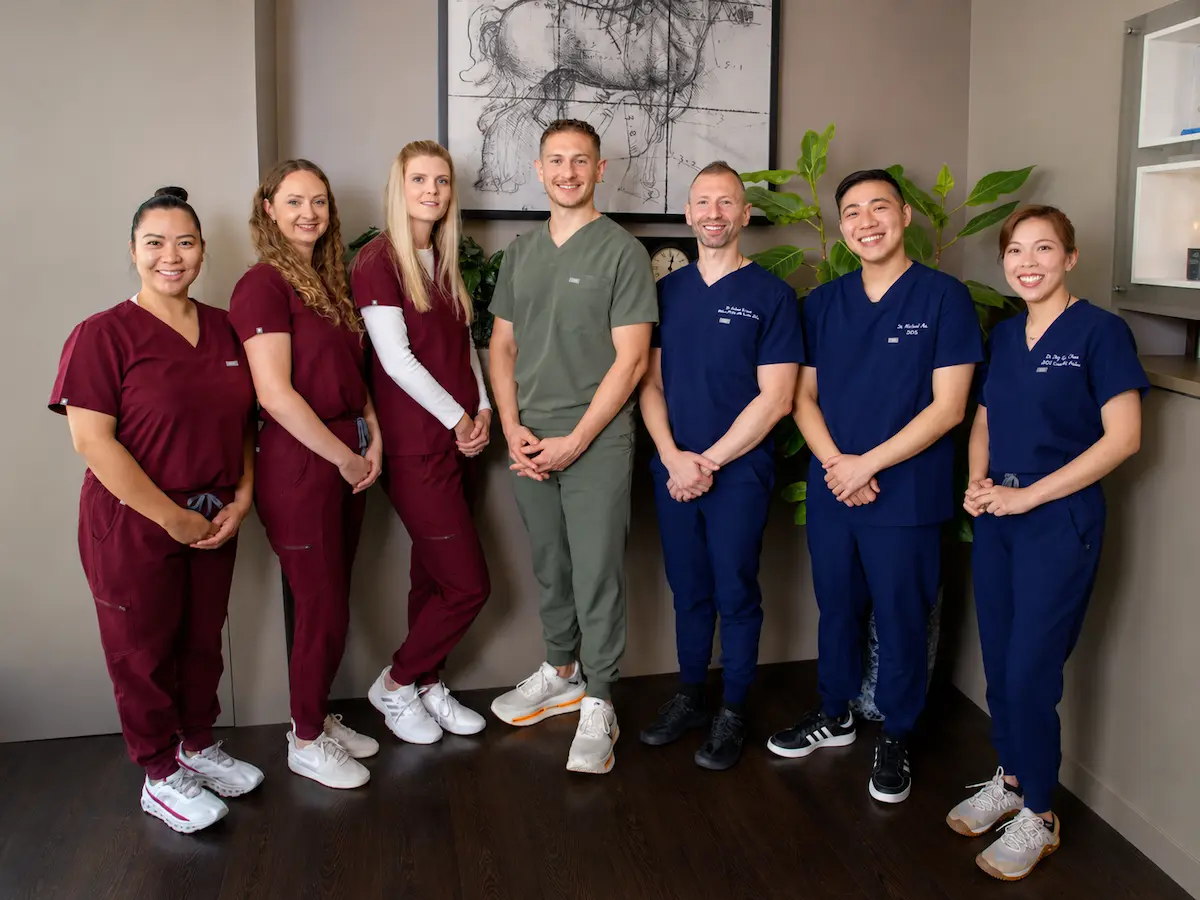
Meet the team behind your restorative care
Dental implant treatment involves assessment, surgical planning, restorative dentistry and long-term maintenance.
Our Sandgate team considers the implant as part of your broader dental health rather than treating the missing tooth in isolation.