
Dental questions · Orthodontics
Braces vs Invisalign: Which Is Better?
Braces and Invisalign clear aligners can both straighten teeth. The better choice depends on your teeth, your bite and your lifestyle. Here is how they compare on appearance, comfort, daily care and cost.
- Braces and Invisalign available
- Children, teens and adults
- Written estimate first
- Assessment first

Not sure which suits you?
An orthodontic assessment at our Sandgate clinic looks at your teeth and bite and explains which options suit you.
Call now →The basics
What is the difference between braces and Invisalign?
Braces use small brackets bonded to the teeth and a wire that is adjusted over time. Invisalign uses a series of clear, removable plastic aligners, each worn for about one to two weeks before moving to the next.
Both apply gentle, controlled pressure to move teeth into a planned position, and both need retainers afterwards. The main differences are in how they look, how they fit into daily life and how much they rely on you.
How they compare
Appearance
Clear aligners are hard to notice. Braces are visible, although tooth-coloured brackets are less obvious.
Eating and cleaning
Aligners come out for meals and brushing. With braces you avoid hard and sticky foods and clean carefully around the brackets.
Comfort
Both cause some pressure for a few days after each change. Braces can rub the cheeks at first; aligners have no wires or brackets.
Appointments
Both need regular reviews. Aligner visits are often quicker as there are no wires to adjust.
Choosing
Is braces or Invisalign better for me?
Neither is better for everyone. Braces suit a wide range of tooth movements and do not rely on remembering to wear them. Invisalign suits many mild to moderate cases and people who prefer a discreet, removable option.
For children and younger teens, braces or early orthodontic treatment may be more practical. For adults and older teens who will wear aligners consistently, Invisalign is often a good fit. We talk you through the pros and cons for your situation.
Wear time matters
Aligners only move teeth while they are worn, usually 20 to 22 hours a day. If that sounds hard to manage, braces may be the simpler choice.
What we look at
Your bite
How your upper and lower teeth meet, including overbite, underbite, crossbite and spacing.
Crowding and rotations
How far teeth need to move and in which directions.
Jaw development
For younger patients, how the jaw is growing and whether timing matters.
Your preferences
Appearance, lifestyle, sport and how much you want to manage yourself.
Cost
Is Invisalign more expensive than braces?
For similar cases, the cost of braces and Invisalign is often comparable. The fee depends mainly on how complex your case is and how long treatment takes, rather than which system is used.
We start with an assessment and give you a written, itemised estimate before you decide. Many private health funds contribute to orthodontic treatment under extras cover, and payment options such as Zip are available.
Good to know
Retainers are included in the plan
Whichever option you choose, retainers are needed afterwards to hold teeth in their new position.
Check your health fund
Orthodontic cover often has its own lifetime limit and waiting period. Your fund can tell you what applies.
Treatment time varies
It depends on how far teeth need to move. Your plan includes an estimated timeframe.
Who you see
Orthodontic care at Dental Seasons is provided by dentists with further orthodontic training.
Meet your dentists
Experienced, highly qualified and genuinely kind
All of our dentists are registered with Ahpra and keep learning well beyond their degrees, so you get thoughtful, up-to-date care.

Dr Andrew Bachour
Principal Dentist
BDSc (Hons, UQ). Master’s degrees in Orthodontics & Dentofacial Orthopaedics and in Sleep Medicine. Special interest in TMJ, orofacial pain and airway health.
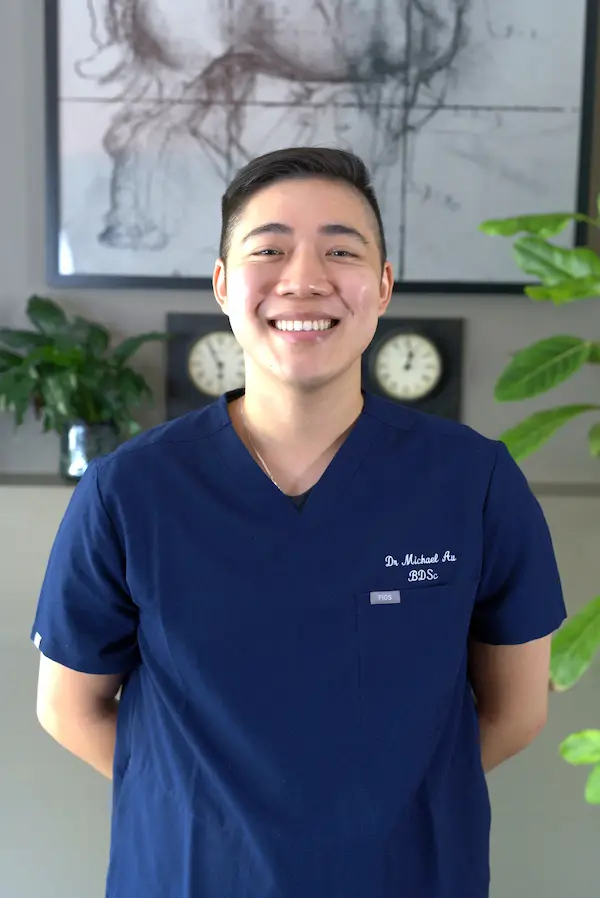
Dr Michael Au
Dentist
BDSc (Hons, UQ). Known for his gentle touch and clear explanations, with advanced training in restorative dentistry and full-mouth rehabilitation.
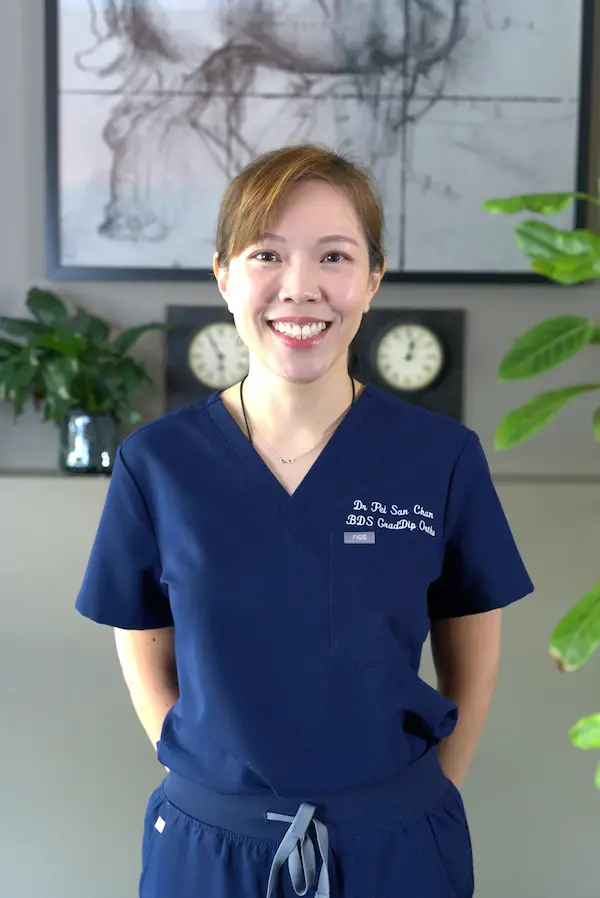
Dr Pei San Chan
Dentist
BDS (Adelaide), GradDip Orthodontics (JCU), DipOrtho (UJI). Warm, calm care for patients of all ages, including children and orthodontics.
Book an orthodontic assessment
Find out whether braces, Invisalign or another option suits you. Book online or call our Sandgate team on (07) 3269 2064.