
Dental questions · Missing teeth
Dental Implant, Bridge or Denture: Which Is Right for a Missing Tooth?
There are three main ways to replace a missing tooth: a dental implant, a bridge or a denture. The right one depends on your bone and gums, the teeth next to the gap, your health and your budget.
- Implants from $5,000
- Written estimate first
- 3D CBCT on site
- Second opinions welcome

Want to know your options?
A consultation at our Sandgate clinic explains which options suit you and gives you a written, itemised estimate before you decide.
Call now →Your options
Three ways to replace a missing tooth
An implant, a bridge and a denture all fill the gap, but they differ in surgery, in what happens to the teeth next door, and in how long treatment takes.
A missing tooth does not automatically mean an implant is the best choice. Sometimes leaving the space is also reasonable, with monitoring. Before we recommend that, we look at how the gap affects your chewing, whether nearby teeth are likely to move, your bite and how it looks.
The three options side by side
Dental implant
A fixture placed in the jawbone that supports a crown. It is fixed, involves surgery, and leaves the neighbouring teeth untouched. Expect several months, as bone needs time to heal.
Dental bridge
A replacement tooth held by the teeth either side. It is fixed, needs no surgery, and usually takes a few appointments. The supporting teeth usually need to be prepared.
Removable denture
A removable plate carrying one or more teeth. There is no surgery, it usually takes a few appointments, and it can replace one, several or many teeth.
Dental implants
How much does a dental implant cost?
At Dental Seasons, a single implant usually costs from $5,000 in total. That covers placement by a specialist we refer you to, plus the implant crown, which we make and fit at our Sandgate clinic.
An implant takes the place of the tooth root, and a crown is attached once the bone has healed. It does not rely on the teeth next to it. Read more on our dental implants page.
Who is suitable for an implant?
Teeth and gums
Gum disease needs treating before implant treatment.
Bone
The amount and quality of bone guides whether an implant can be placed and whether grafting is needed. Our on-site 3D CBCT scanner helps us assess this.
Nearby structures and bite
Nerves, sinuses, neighbouring roots and how your teeth meet all shape the plan.
General health
Medical conditions, some medications and smoking are part of the risk discussion.
Bridges and dentures
When a bridge or denture makes more sense
A bridge has no surgery and is usually finished sooner than an implant. It can make good sense when the teeth either side already have large fillings or crowns.
Dentures involve the least treatment and usually the lowest cost. They are removable, so they take some getting used to, and they need adjusting as your mouth changes. Read more about dental bridges and dentures.
How we help you decide
Examination
We examine the gap, the neighbouring teeth, your gums and your bite.
Imaging
We take X-rays, and a 3D CBCT scan where it is needed.
Your options explained
We explain which options suit you, with the risks, timing and upkeep of each.
Written estimate
You receive a written, itemised estimate before any treatment starts, with item numbers to check against your health fund. If you have a plan from elsewhere, bring your X-rays and we can give you a second opinion.
Meet your dentists
Experienced, highly qualified and genuinely kind
All of our dentists are registered with Ahpra and keep learning well beyond their degrees, so you get thoughtful, up-to-date care.

Dr Andrew Bachour
Principal Dentist
BDSc (Hons, UQ). Master’s degrees in Orthodontics & Dentofacial Orthopaedics and in Sleep Medicine. Special interest in TMJ, orofacial pain and airway health.
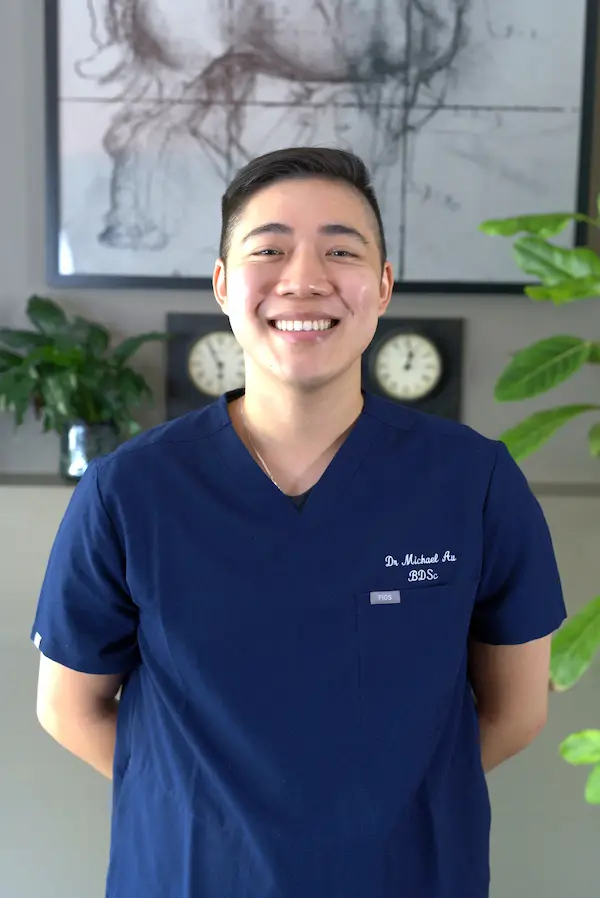
Dr Michael Au
Dentist
BDSc (Hons, UQ). Known for his gentle touch and clear explanations, with advanced training in restorative dentistry and full-mouth rehabilitation.
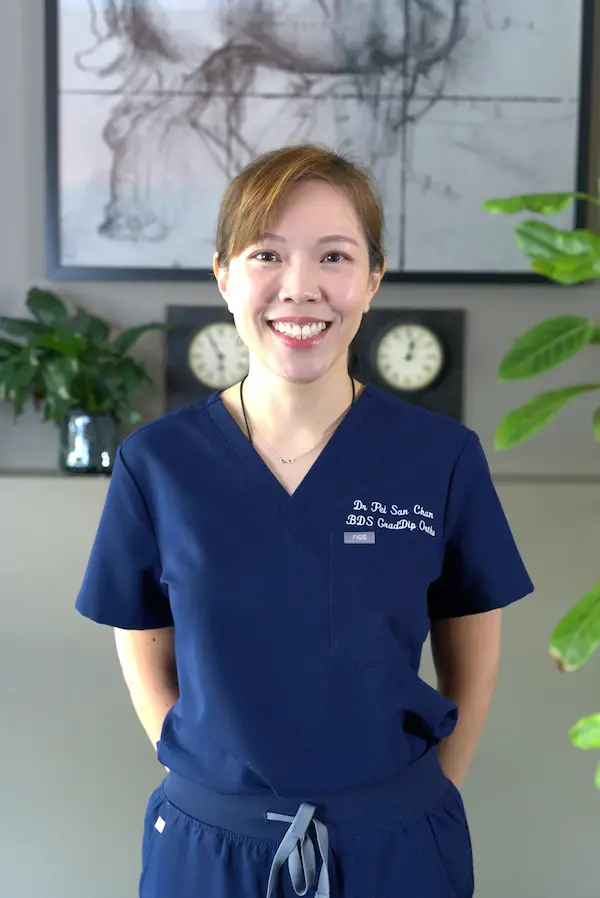
Dr Pei San Chan
Dentist
BDS (Adelaide), GradDip Orthodontics (JCU), DipOrtho (UJI). Warm, calm care for patients of all ages, including children and orthodontics.
Book a consultation
Talk through your options for replacing a missing tooth. Book online or call our Sandgate team on (07) 3269 2064.